
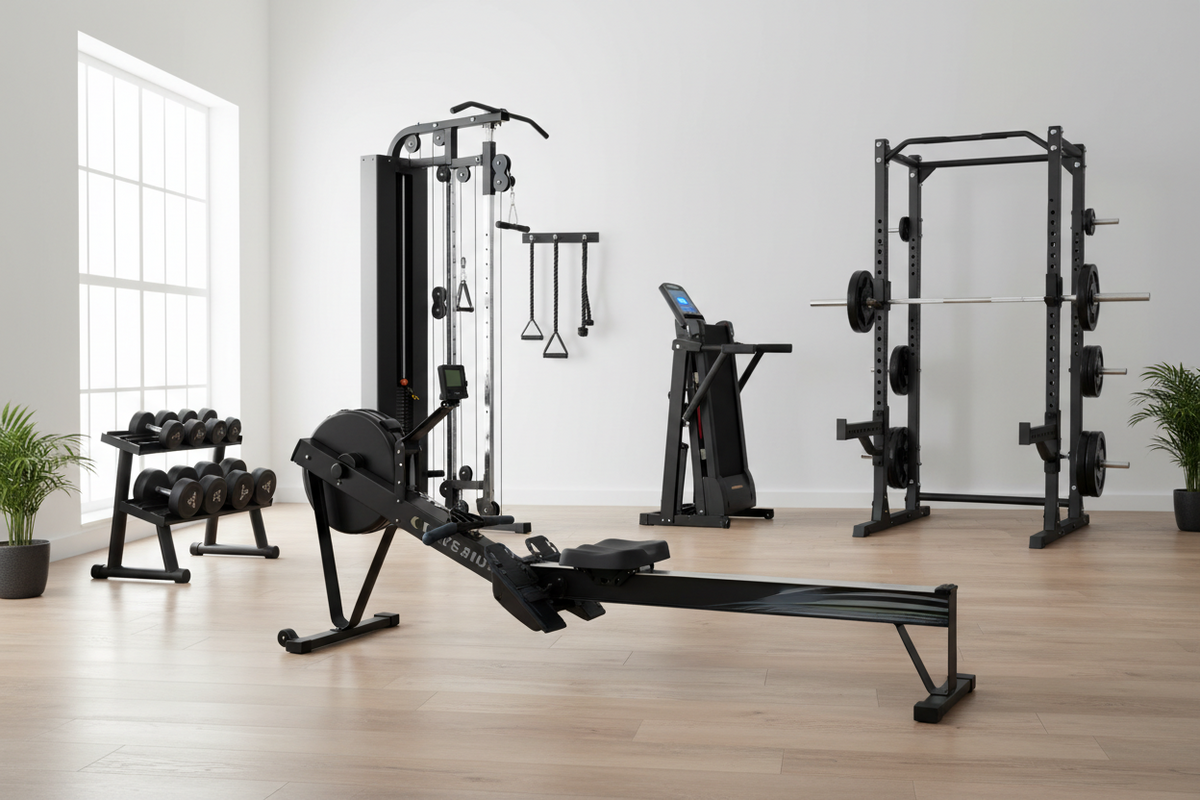
How often has this happened? You plan to hit the gym, but the drive feels longer than the workout itself. You reach during peak hours and end up waiting for machines. Sometimes you leave early because you do not feel like standing in line for equipment. After adjusting your schedule around crowds more than once, the idea of setting up a home gym starts to sound practical.
Gym memberships do not always feel expensive in the beginning. The monthly payment seems manageable. It becomes noticeable later, especially when weeks go by without regular sessions. Paying for something that is not used consistently can start to feel unnecessary.
That is often when the thought of training at home begins to feel more realistic.
The idea itself sounds simple. But once someone actually considers it, a few practical questions appear. What should be bought first? Is a treadmill worth prioritizing, or would another machine make more sense? How much space is really available? And will the investment feel justified six months later?
These questions are normal. Setting up a home gym is not about filling every corner with equipment. It is usually about choosing a few pieces that will actually be used — and leaving the rest out. This blog breaks down five essential machines that can replace the core functions of a gym membership.
-
Treadmill
A treadmill is usually the biggest purchase in a home gym, so the hesitation is normal. It takes space, it costs more than smaller equipment, and it feels like a “serious” commitment. The reason it still makes sense for many people is simple: it replaces the part of the gym that gets used the most. For a large number of routines, cardio is the habit that keeps everything moving—fat loss, endurance, warm-ups, even recovery walks—and the treadmill area in most gyms stays busy for that exact reason.
The real question is how it will be used. If it is mainly for walking or controlled jogging, a basic motorized treadmill with steady speed control is more than enough. There is no need to overspend. If incline sessions are important for fat-loss or lower-impact conditioning, then adjustable incline becomes useful. A curved treadmill feels different altogether. Since it moves with your stride, it demands more effort and usually suits people who prefer harder sessions.
Cost usually increases with motor strength and build quality. But the decision should come down to routine. The treadmill that fits the habit is the one that makes the investment worthwhile.
2. Adjustable Bench
An adjustable bench might not look like a major piece of equipment, but in most gyms it quietly supports a large part of the strength area. Pressing movements, incline work, seated shoulder exercises — many lifts depend on having a stable surface at the right angle.
At home, a good bench does more than provide support. It expands options. Flat settings work for basic presses, incline positions change the muscle focus, and even simple step-ups or core movements become easier to structure. Without a bench, strength training often feels limited to standing exercises.
The key is stability. A solid frame matters more than extra attachments. Some benches fold for space-saving setups, others are heavier and more fixed. The choice depends on the available room and how frequently it will be used.
In practical terms, an adjustable bench replaces a surprising amount of what the gym’s pressing stations provide. It does not look dramatic, but it makes other equipment far more useful.
3. Barbell and Weight Plate Set
Where most real strength work happens in a gym is around the barbell and plates. Squats, deadlifts, presses — the movements that build overall strength usually revolve around that setup. Machines may surround it, but the barbell area tends to stay active.
Bringing a barbell and weight plates set home recreates that environment without needing an entire rack of machines. Plates allow gradual progression instead of jumping between fixed weights. That small detail makes long-term training smoother and more practical.
Some prefer basic iron plates. Others go for coated versions that last longer and reduce noise. The barbell itself should feel balanced and sturdy rather than complicated.
Together, the barbell and plates replace the core free-weight section of a gym—the part responsible for most compound strength development.
4. Multi-Station Trainer
After heavy barbell work in a gym, most people eventually move toward cables. A few controlled rows. Some chest fly variations. Triceps work with steady resistance. It feels different from lifting plates, and that difference matters.
A multi-station trainer brings that same option into a home setup. The weight stack adjusts quickly, so switching between movements takes seconds. Rows, presses, pulldowns, and isolation work all stay within one frame. There is no need to unload a barbell every time the exercise changes.
Cables create smoother resistance through the full range of motion. That smoothness can feel more controlled, especially during accessory work after compound lifts. For households where more than one person trains, the easy adjustments make shared use practical.
In many gym routines, cable work fills the space between heavy sets. A compact multi-station unit simply allows that part of the session to happen at home as well.
5. Kettlebells
Walk into almost any gym and you’ll usually find a few kettlebells tucked off to the side. They’re not flashy. No screens. No adjustments. Just solid pieces of iron sitting there. Still, they get picked up often.
At home, even one kettlebell can change how a session feels. Swings raise the heart rate quickly. Goblet squats feel different from barbell squats — more upright, more controlled. Carries are simple but demanding. There isn’t much setup involved. You pick it up and move.
That’s part of the appeal. No loading plates. No adjusting cables. Just resistance in your hands. For shorter sessions, that simplicity matters.
A couple of kettlebells in different weights is usually enough. They don’t dominate the room, but they cover strength and conditioning in a way that feels direct.
In a gym, that small corner supports a surprising amount of training. At home, it does the same — without taking over the space.
Final Thoughts
Most people who consider building a home setup already know what they use in a gym. It usually comes down to a few movements repeated every week. Cardio, bench presses, pulling, and some kind of conditioning in between.
Those five gym equipment simply bring that routine closer to home.
The space may look different, and the atmosphere will never feel the same as a large facility, but the work itself stays familiar. Sessions still move from one exercise to another. Strength still increases gradually. Cardio still gets done.
Over time, the biggest change is consistency. When the equipment is available without planning around traffic or busy hours, workouts stop feeling like a scheduled event and start feeling normal.
For many people, that shift is enough to replace what they were actually using a membership for in the first place.
